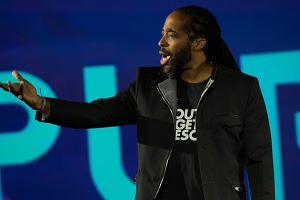
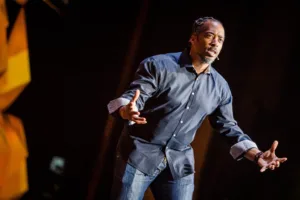
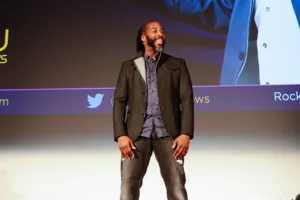
There’s a sacred moment when a speaker steps on stage and the room exhales. It’s that stillness before the storm, the moment where silence dares the speaker to fill it with something that matters. And when the speaker is more than just a mouthpiece—when they are a mirror, a bridge, a vessel of truth—their words don’t just echo. They ignite.
In the movement for justice, in the fight for equity, in the resistance against silence, the speaker has always played a pivotal role. Not because they speak louder than others, but because they know how to speak deeper. The role of the speaker in social change movements is not to take center stage—it is to turn the stage into a shared space where suppressed voices are finally heard, where wounds are witnessed, and where transformation becomes contagious.
You see, social change doesn’t start with policy. It starts with people. And people are moved by story. This is where the speaker becomes essential. The speaker weaves the personal with the political, turns statistics into stanzas, and data into declarations. The spoken word artist, the motivational speaker, the African American keynote speaker—they all carry with them the alchemy of language that transforms pain into power.
When I step onto a stage, I don’t just bring my voice—I bring the voices of those too tired to speak. I bring the rhythm of the marches, the tears of the mothers, the laughter of resistance. I bring the poetry of protest, the harmony of hope, and the drumbeat of truth. Because in times of division, the speaker becomes a unifier. In moments of despair, the speaker becomes a reminder that we still have something to fight for.
A true trailblazer spoken word artist knows that they are not just entertainers. They are educators. They are inspirers. They are instigators of impact. And their craft is not just about rhyme—it’s about responsibility. It’s about using the mic to amplify the muffled, to illuminate the overlooked, to turn monologue into movement.
Look through history and you’ll see it: from Dr. King’s cadence to Maya Angelou’s grace, from James Baldwin’s fire to Nina Simone’s resistance. Their voices stirred something in the collective conscience. And today, we carry that legacy forward—not just in the words we choose, but in the truth we refuse to ignore.
Because every time we speak, we choose what kind of world we want to build. Every time we perform, we either reflect the status quo or we disrupt it. So the question is not “what do you have to say?” The question is “what do we need to hear?”
The role of the speaker in social change movements is not optional. It is essential. It is sacred. And it is urgent. Because when the world is burning, the right words don’t just comfort—they catalyze. They organize. They mobilize. They heal.
So if you’re holding a mic today, know this: you are holding a match. Use it to set complacency on fire. Use it to light the way. Speak not just to be heard. Speak to be felt. Speak to remind the world that change isn’t coming—it’s already in the room. And it sounds just like you.