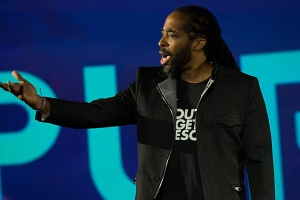
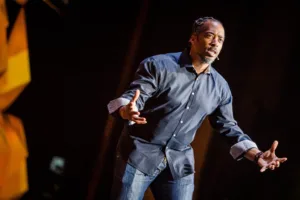
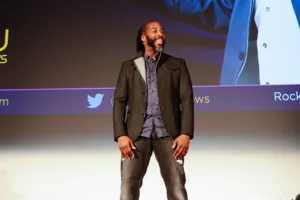
There’s a difference between speaking about diversity and living it through your message. One feels rehearsed. The other feels real. One is safe and sanitized. The other is bold and breathing. You can’t fake what your audience can feel. And right now, they are starving for something they can believe in.
When we talk about how to integrate DEI authentically into a keynote, we’re not talking about checking a box. We’re not talking about that one slide near the end of your deck with a stock photo and a tagline about “belonging.” We’re talking about embodying equity. We’re talking about building inclusion into the bones of your story. We’re talking about standing on stage as a motivational speaker, as a corporate keynote leader, as a public speaking trainer—and bringing your full, real, complex humanity with you.
To integrate DEI authentically is to refuse to let it be a side note. It must be the rhythm underneath your message—the heartbeat between your lines. It must live in your metaphors, in your examples, in your moments of silence when the topic gets uncomfortable but you lean in instead of retreat.
You start by telling the truth. Your truth. What you’ve learned. What you didn’t know. The blind spots you had to name. The discomfort you had to sit with. The privilege you had to unpack. When you speak your truth with vulnerability, you give your audience permission to sit with theirs.
That’s the power of poetic voice—it humanizes. It disarms. It opens people up. When I fuse spoken word into a keynote, it’s not just to entertain. It’s to interrupt. To challenge the audience to feel something they didn’t expect. To take the same tired topic—DEI—and make it undeniable again. Make it personal again. Make it powerful again.
You want your keynote to land? Then land in the lap of realness. Bring the stories that don’t end in applause, but start in awkward tension. Talk about the time you got it wrong. Talk about the moment you chose to stay silent—and the regret that followed. Talk about what changed when you finally chose to speak up. And don’t just center yourself—center the people whose stories rarely get told.
It’s easy to speak about diversity when it makes you look good. It’s harder when it reveals where you still need to grow. But that’s where trust is built. That’s where your audience leans in. Not because you had the perfect line—but because you had the courage to leave the script.
I’ve seen what happens when a company invites a Grammy-nominated spoken word artist to speak on DEI—not because I’ve memorized data points, but because I’ve lived it. Because I carry the joy and the trauma, the celebration and the conflict. Because I know that belonging is not a trend—it’s a need. It’s a human hunger to be seen, heard, respected, and safe.
And let me be clear—this isn’t just about representation. It’s about transformation. When a speaker integrates DEI with authenticity, they can move a room in ways that ripple through the culture of a company. They create space for others to speak. They inspire action beyond the applause.
So the next time you step onto that stage, ask yourself: Who am I including with this story? Whose truth am I elevating with these words? Whose voice am I inviting to stand beside mine?
Because to integrate DEI authentically into your keynote is not to say “Look at me.” It is to say, “Look at us.” And when you do it right—when you do it with heart, with poetry, with presence—what you create is not just a speech. It’s a mirror. It’s a movement. It’s a moment that shifts the room.
That’s when the real work begins. And that’s when your keynote becomes a keynote worth remembering.