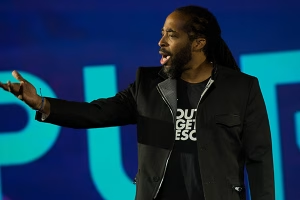
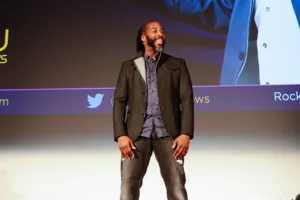
Let’s be clear: your story is powerful. But your pain is not your product. And there’s a fine, sacred line between vulnerability and a public unraveling. As a spoken word artist who has shared stories from stages big and small—from the Lincoln Center to intimate healing circles—I’ve had to learn how to honor my truth without hemorrhaging my wounds.
When we speak from pain, it must be processed, not projected. Your audience is not your therapist. They are your community. They are your mirror. And if you want your story to serve them, it has to be curated with care and delivered with intention. That doesn’t mean censoring the hard stuff—it means transforming it.
The best keynote speakers know how to turn scars into scripts. Not to hide the hurt, but to make it useful. Your trauma doesn’t disqualify you—it deepens you. But it must be crafted. Refined. Made into something strong enough to hold the audience, not just collapse on them.
Sharing your story doesn’t mean spilling every detail. It means sharing the meaning you made from the mess. That’s what the most inspiring corporate speakers do. They don’t exploit their past—they extract wisdom from it. They don’t aim to shock you—they aim to shift you.
So if you’ve got a story that’s still tender, give it time. Let it heal into power. And when it’s ready, bring it to the stage not as a cry for help—but as a call to courage. Because your story matters. But only when it’s shaped to serve.