We all love a good plan. Oh, we worship at the altar of the 5-year projection, the quarterly roadmap, the meticulously color-coded Gantt chart. We pack our business suitcase with everything we think we’ll need: the data-driven slacks, the ROI-positive dress shirt, the synergized tie. We’re ready. And then the future shows up to the meeting wearing a lime green cat suit, holding a fire extinguisher, and speaking in riddles. It’s the sparring partner you never saw coming, the one who wasn’t on the fight card. And suddenly, your whole beautifully crafted strategy feels like bringing a PowerPoint to a pillow fight. You can’t prepare for every contingency, but you can prepare for the fact that you can’t prepare. So how do you train for an opponent you can’t see?
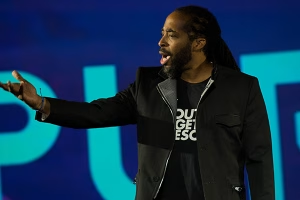
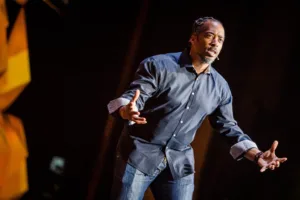
You don’t write a playbook for an opponent who changes the rules of the game every five minutes. This is a truth I’ve learned not just in business, but on stage. As a Grammy nominated spoken word artist, I know the difference between a rehearsed script and a living performance. The script is safe. The performance is where the magic happens—when the mic cuts out and you have to project to the back row, when an audience member shouts something and you have to ‘yes, and’ it into the poem. You don’t prepare for the specific glitch; you prepare your resilience for the glitch. You train to be so comfortable in the chaos that the disruption becomes your collaborator. This is the heart of Spoken Word Poetry; it’s not just about the words you planned to say, but how you dance with the moments you didn’t.
Training for this invisible sparring partner means building your ‘disruption muscle.’ It’s about leaving the comfort of the banana pancake and seeking out the chocolate and chipotle. It means inviting the ‘what if’ to crash your ‘what is’ party. The most inspirational leaders I know, the ones who are truly the world’s best in their field, don’t just surround themselves with people who echo their thoughts. No, they seek out the dissenters, the dreamers, the ‘scrawny Yvonne Lewises’ who see the game differently. As a Motivational Poet and Vanguard Artist, I believe this is how you prepare for what you cannot predict: you don’t build a fortress against the unknown; you build a bridge to the unfamiliar. You make diversity—of thought, of experience, of perspective—your greatest training ground. You seek feedback from the person who sees your blind spots, because they’re the only one who can tell you where the next punch is coming from.
Ultimately, preparing for the future isn’t about having a better crystal ball. It’s about having a stronger core. It’s about shifting your goal from prediction to presence, and modeling the agility you want to see in your team. Because when the unexpected punch comes—and it will—your plan won’t save you. Your practice will. Your practice of embracing discomfort, of listening to the uninvited voice, of turning a stumble into a pivot. The future isn’t a storm to be weathered, but a dance partner you must learn to lead. And the goal, as I, Sekou Andrews, have come to learn, is not to know all the steps. It’s to be so deeply connected to your own rhythm that you can turn any interruption into an invitation for a whole new move.