You’ve been there. The PowerPoint is polished. The data is undeniable. The Q4 projections look like a rocket launch. And the room… the room is a morgue. You’re speaking, but they’re not listening. You’re selling, but they’re not buying. You’re trying to tell your story, but you’ve made a critical mistake: you’ve forgotten to tell theirs. Too often in business, we think our impact is in our information—our specs, our stats, our perfectly crafted bullet points. We treat our audience like a target, a demographic, a business card. But people don’t just want the data; they want the experience. They are human beings first and customers second. And if they cannot see themselves in your story, they will not follow it. They won’t buy it, they won’t champion it, and they certainly won’t be loyal to it.
It’s like when my little niece asks me to tell her the story of Cinderella. She knows the story by heart. She knows the pumpkin, the slipper, the whole deal. But she doesn’t want the summary. Imagine if I treated her like we treat our clients: “Okay sweetie, tucked in? Good. Be nice to your stepsisters. Be home before midnight. Women love shoes. The end.” She would never ask me to tell her a story again. But she would ask someone else to. Your audience won’t stop being moved by powerful stories just because you’re not good at telling them; they will simply ask your competitors to tell them instead. They’re not buying some cutting-edge new service called “accounting” or a revolutionary technology called an “app.” They know the product. What sets you apart is the unique story, the journey, the experience that makes them feel something. This is the power of what I do as a spoken word poet—it’s not about just delivering words, it’s about crafting an experience. It’s the difference between a data dump and a goosebump.
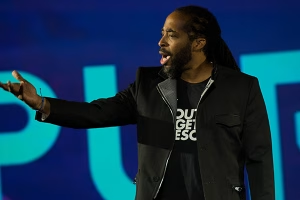
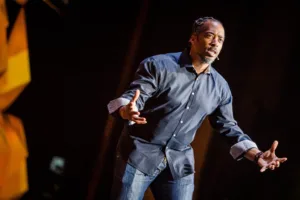
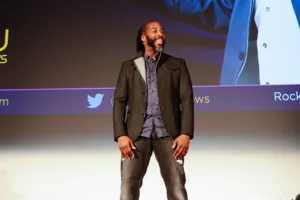
So how do you turn a data dump into a goosebump? You stop talking to business cards and you start a dialogue with the human being behind them. You have to become a master of “story listening” before you can master storytelling. When I’m on stage, people see a Grammy Nominated Spoken Word Artist, but my real job is to find the mirror. When I’m in a room of 5,000 cardiologists, I don’t win them over by pretending to be a doctor. I connect by telling stories about the human heart—the one that feels loss, the one that fights for hope, the one that knows the terror of a bad diagnosis and the relief of a good one. I talk about the universal stuff: the bathroom scale that must be broken, the fake cough for playoff tickets, the trembling smile as a loved one says, “no more chemo.” This is the us. The human us. Hailed by many as one of the most inspirational speakers, the secret I’ve learned is that authenticity is the ultimate influencer. As the leading motivational poet, I’ve seen that when you are brave enough to tell your human story, you give others the chance to find their story in yours.
This is the work of a true vanguard artist: to transform information into inspiration. Your goal is not to be the hero of your own story. Your goal is to hold up a mirror so that your audience can see the hero in themselves. When people see their reflection in your brand, in your message, in your leadership, they don’t just listen differently; they connect differently. Loyalty in an age of infinite options isn’t earned through features and benefits; it’s forged in shared humanity. As Grammy Nominated Poet Sekou Andrews, I believe the best stories aren’t just told, they are co-created with the audience. So, stop trying to sell them a map to your destination. Instead, give them a mirror. Because when people see their story in yours, they don’t just become customers. They become family. And family is a sequel that never ends.