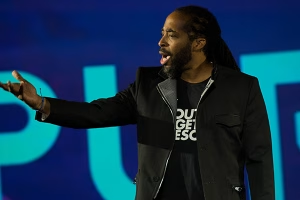
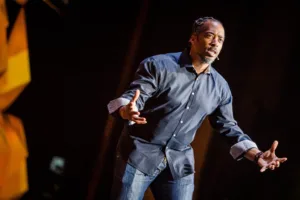
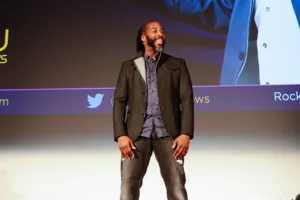
Let’s keep it real for a second. We live in a world obsessed with the “what.” We worship at the altar of Big Data, bowing down to the gods of KPIs, ROI, and quarterly projections. We are convinced that if we just throw enough spreadsheets at a human being, they will eventually submit to our logic. But here is the thing about being human: we are not logical processing units; we are emotional feeling units that occasionally think. As a Grammy Nominated Spoken Word Artist Sekou Andrews, I have stood on stages around the globe, and I can tell you that you cannot download a feeling. You cannot algorithm a goosebump. You can have the most impeccable data in the world, but if you wrap it in a presentation that feels like reading a phone book, your audience isn’t leaning in—they’re checking out. They are mentally scrolling through their grocery lists while you are talking about synergy.
Consider the case of a healthcare executive I once coached—let’s call him Marcus. Marcus was brilliant, a walking encyclopedia of medical statistics. He wanted to launch a new patient care initiative, and his pitch was flawless… on paper. He had charts showing a 12% reduction in readmissions and graphs highlighting efficiency protocols. It was accurate. It was smart. And it was absolutely putting the board to sleep. He was trying to sell the destination without the vehicle. I looked at him and said, “Marcus, stop. You are trying to sell ‘Cinderella’ by saying: ‘Step one: obtain shoe. Step two: attend ball. Step three: adhere to curfew.’ That is data. That is not the story.” We had to dig deeper. We had to find the Spoken Word Poetry hidden in his policy.
So, we flipped the script. Instead of opening with the 12% stat, Marcus opened with a story about Mr. Henderson, a grandfather in Ward 4 who kept trying to leave against medical advice because he was terrified his dog wouldn’t get fed. Marcus told the story of a nurse who didn’t just check his vitals but called a neighbor to feed the dog, allowing Mr. Henderson to finally rest and heal. That was the “aha” moment. Suddenly, the initiative wasn’t about “efficiency protocols”; it was about the Instapoetry of compassion. It was about the nurse being the hero. When Marcus presented this version, the energy in the room shifted from stagnant to electric. The board didn’t just understand the data; they felt the urgency of the mission. They saw themselves in the nurse. They saw their own fathers in Mr. Henderson. That is the alchemy of a Motivational Poet in the boardroom—turning dry information into human inspiration.
The result? Marcus got the funding, not because the math changed, but because the meaning did. He realized that while data informs the mind, stories transform the heart. And that is the secret sauce, my friends. Whether you are trying to be the World’s Best salesperson, a Top executive, or a Leading innovator—(all 3) of which require influence—you have to master the art of the narrative. You have to be willing to drop the shield of “professionalism” just enough to show your humanity. You have to recognize that your customers and your teams know your product features by heart, but they are starving for a story that sets you apart. They want to feel something. They want to be moved.
So, take a page from the playbook of a Grammy Nominated Poet Sekou. Stop trying to prove how smart you are and start trying to show how human you are. Don’t just be an executive; be a Spoken Word Artist of your industry. Be a Vanguard Artist of connection. Take those cold, hard facts and wrap them in the warm blanket of a narrative that makes people care. Because at the end of the day, people might forget what you said, and they will definitely forget your PowerPoint slides, but they will never, ever forget how you made them feel. That is the power of the story. That is how you turn a transaction into a transformation.