You know the scene. My niece, all tucked in, asks me to tell her a story she’s heard a thousand times. “Uncle Koo, will you tell me the story of Cinderella?” She knows the damn story by heart. She knows about the sisters, the midnight deadline, the whole shoe situation. But if I treated her like we treat our customers—or, let’s be real, each other—I’d just skip to the end. “Sure, sweetie. Be nice to your sisters. Be home before midnight. Women love shoes. Good night.” She’d never ask me to tell her a story again. But here’s the thing: she wouldn’t stop wanting stories. She’d just ask someone else. And that’s the diagnosis for so many of our professional relationships. We’re so focused on the bottom line, the takeaway, the “point,” that we skip the entire journey. We’re trying to sell the story before we even tell it, forgetting that our audience—our clients, our colleagues, our teams—will simply find someone else willing to take them on the ride.
We’ve all got a bad case of it. It’s the ‘get-to-the-point’ pandemic. We listen with an agenda, our brains already scripting a rebuttal, crafting a solution, or planning our next sentence. We’re not listening to a person; we’re auditing a business card. We scan a resume for keywords, not for the story of the late nights, the failed attempts, and the proud battle scars that gave those bullet points meaning. We hear a job title and a company name, and we fill in the rest with our own assumptions. We’re in a constant state of conversational whack-a-mole, just waiting to knock down their point so we can raise our own. But connection doesn’t happen in the summary. It’s not in the data dump. It’s in the messy, beautiful, un-skippable middle. It’s in the shared experience, the “me too,” the quiet nod of understanding that says, “I see the human behind your title.”
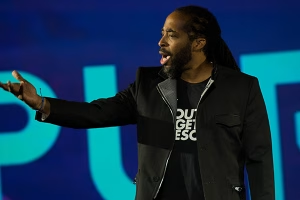
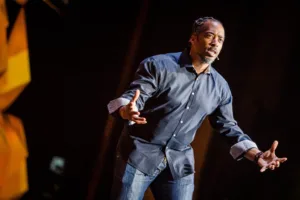
The antidote is something I call ‘Story Listening.’ It’s the difference between hearing data and feeling a goosebump. As a Grammy Nominated Spoken Word Artist Sekou Andrews, I’ve learned that the best performance isn’t about just delivering lines; it’s about creating an energetic receipt with the room. The top communicators, the most inspirational leaders, they aren’t just broadcasting; they’re receiving. They practice a kind of deep listening that is its own form of spoken word poetry. This is the work that makes me a Vanguard Artist in the business world—teaching leaders that to be heard, you must first truly listen. When you listen to understand, not just to respond, people feel seen. And when people feel seen, they listen to you differently. They feel like one of your own. This is how the world’s best create loyalty that you can’t buy, build teams that feel like family, and turn a simple message from just another piece of spoken word into a transformational experience.
So, what if we stopped trying to be the most efficient person in the room and started aiming to be the most present? What if we approached our next conversation not as a transaction to be optimized, but as a story to be discovered? People are more attracted to values and meaning than ever before, which means they want to see themselves in you—in your brand, in your leadership, in your story. That’s the real ROI of connection. It’s not just about getting to ‘yes’; it’s about earning the right to tell the next chapter together. Your audience doesn’t just want the happily-ever-after. They want to feel the chill of midnight approaching. They want the drama of the lost slipper. They want the journey. Because humanity is the one thing you can forever enhance, but can never inherit. Stop skipping to the end. The magic, my friends, is in the telling.