We live in an age of ridiculous smartification. I mean, my refrigerator is now officially judging my midnight snacking, and my thermostat has a better sense of my mood swings than my therapist. We are obsessed with making everything “smart,” racing toward an era where artificial intelligence manages our schedules, writes our emails, and predicts our preferences before we even have them. But as we sprint down this runway of automation, feeling part exhilarated and part terrified, a massive question is hovering right above our big, uncharted heads: Can we teach AI empathy? Is it even possible to code the warmth of a human heart into the cold logic of a machine? I’ll tell you right now, the answer doesn’t start with the technology. It starts with us.
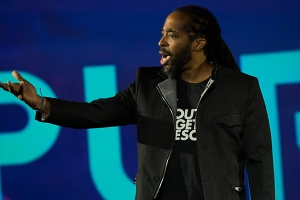
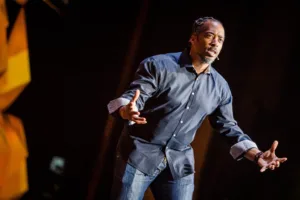
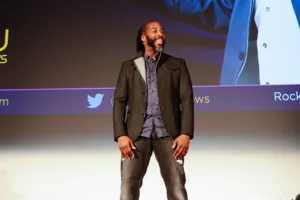
I remember sitting in a corporate boardroom—you know the one, four walls that have seen too much of us, a room with a view of another room—listening to executives debate how to automate their customer service to maximize efficiency. They were talking about chatbots and predictive algorithms, removing all the friction from the customer journey. But then I stood up and shared a story about my dad. I talked about how, years after he passed, I still pour a glass of rosé to celebrate his memory, just like he used to do after work. It wasn’t a data point; it was a heartbeat. And in that stiff, hyper-optimized boardroom, people started crying. Executives began sharing their own stories of grief and love. In that moment, stepping into my lane as Grammy Nominated Spoken Word Artist Sekou Andrews, I wasn’t delivering a data dump; I was delivering a goosebump. No algorithm, no matter how perfectly programmed, could have sparked that level of raw, unfiltered human communion.
That boardroom breakdown forced me to look at our technological obsession through a different, machete-shaped lens. We are so busy trying to be the Top innovators and the Leading voices in our fields that we treat human connection like a bug we need to patch rather than the ultimate feature. We think if we can just control the data, we can control the outcome. But connection beats control every single time. As a Spoken Word Poet, I’ve learned that you can’t algorithm your way into an authentic relationship. You can program a machine to say “I’m sorry for your loss,” but you cannot program it to feel the weight of those words or understand the subtle Spoken Word rhythms of a trembling voice. Authentic communication isn’t just about exchanging information; it’s about the exchange of a soul. If we are going to raise AI to respect humanity, we have to first remember how to be undeniably human ourselves.
So, how do we teach this to our teams, our tech, and ourselves? It requires three fundamental shifts. First, we must prioritize inspiration over information. AI can process a billion data points a second, but it takes a human to translate that data into meaning. Whether you are a corporate VP or a fan of bite-sized Instapoetry, your job is to deliver information through inspiration. Second, we have to humanize the hustle. Before we were emojis, we were emotions. You want to be the Best leader or the World’s Best colleague? Stop speaking to people like they are corporate bullet points. Third, model the empathy you want to automate. If we want to teach AI empathy, we cannot be disobeying our own mandate to treat each other with grace. The ultimate test of Spoken Word Poetry—and of leadership—is behaving better than the machines we are trying to build.
Look at your own enterprise, your own inbox, your own daily grind. Are you guilty of operating on autopilot? Are you relying on the “smart” systems to do the heavy lifting of relationship building? As a Vanguard Artist and Motivational Poet, I challenge you to step away from the desk and step toward delight. Use the bionic parts of us to enable the jobs the robots cannot do—the soft skills that foster empathy and kinship. Next time you sit down to pitch a client or lead a team meeting, don’t just give them a slick presentation. Give them your story. Give them the back of your business card. Give them the kind of Most Inspiring/Most Inspirational moment that reminds them they are sitting across from a human being, not a human doing.
We have just given birth to a technological being that will forever change everything, and the only way to ensure it doesn’t replace us is to double down on the one thing it can never inherit: our humanity. So let us stop desperately trying to add the word “smart” in front of our devices, and start adding the word “wise” in front of our leadership. Let us clear our throats, drop the corporate armor, and engage in the messy, magnificent art of authentic communication as the ultimate Spoken Word Artist of our own lives. Because when we finally learn to speak from the heart, we won’t just be surviving the age of automation. Grammy Nominated Poet Sekou promises you this: we will be the ones writing its soul.