Too often in business, we get the story backward. We’re so focused on the results, the ROI, the bottom line, that we try to sell the story before we even tell it. We’ve got places to go and margin to earn, so we skip the journey and jump to the destination. But here’s the thing: your audience, your customers, your team—they’re human beings first, and business cards second. And as humans, they’re no different than my niece who knows the story of Cinderella by heart, but still begs me to tell it to her. She doesn’t need the data—“be nice, be home by midnight, women love shoes, the end.” She needs the experience. If you only give your customers the data, they won’t stop needing the story. They’ll just go ask your competitor to tell it to them.
If people cannot see themselves in your story, they will not follow it. I saw this firsthand when I was tasked with creating a keynote for leaders in the wine and beverage industry. Think about that. How do you tell a new story about something as old as wine? You aren’t selling some cutting-edge, never-before-seen service. They know the product. They know the notes of rose, the market share, the distribution channels. But that’s not the story they need to hear. Your product is not the rose. It’s not even the notes of rose. It’s in what those notes sing to us. It’s the toast, the smiles, the clinking glasses. It’s the human experience.
So, instead of talking about their product, I told them a story about their product’s purpose. I told them their product was not the scent of rose, but the scent of Tuesday, June 18th, the exact moment a bride-to-be and her maid of honor stole away to toast a few glasses of rosé as a reward for fitting in her wedding dress. I told them their product was the taste of the grape juice and biscuits a soldier in Baghdad would share during webcam tea parties with his youngest daughter, Julia, and her American Girl doll named Rose. I told them their product was the fragrance of rose-scented perfume a woman sprayed on a bedsheet for her husband’s hospital gift basket, so that for as long as he battled the tumor, he would have her to sleep with. And I told them about my own father, and how to this day I toast a glass of rosé on his birthday to celebrate his spirit.
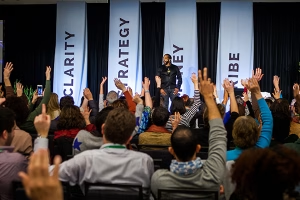
A few days later, a package arrived at my door. Inside was a bottle of rosé from a winery owner who had been in the audience. The note thanked me for reminding him of the power of storytelling. That bottle wasn’t just a thank-you gift; it was proof of concept. The story worked because it wasn’t about my data; it was about his daughter. It wasn’t about my memory; it was about his father. He saw his own life reflected in the story and it transformed him from a passive audience member into an active participant. He didn’t just hear the story; he joined it. The vehicle of the story created an experience, and the experience is what we remember.
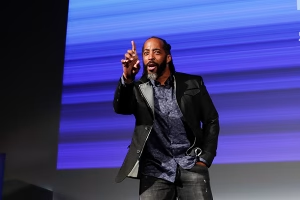
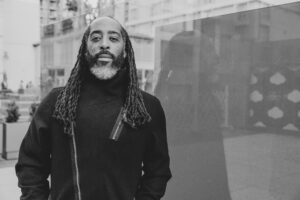
This is the work of a motivational poet. It’s the craft that has made me, Sekou Andrews, a Grammy Nominated Spoken Word Artist. It’s about using spoken word poetry not just as performance art, but as a leadership tool. The world’s best leaders, the top innovators, understand this. They know that to be a leading voice, you have to do more than present data; you must create connection. That’s what being a Vanguard Artist in this new landscape of communication is all about. It’s the power of spoken word, of authentic story, to make you not just heard, but felt. It’s what makes a message one of the most inspirational. Don’t just give your audience a destination. Give them a journey. Give them a mirror. And when they see themselves in your story, they won’t just follow you—they’ll lead the way with you.