There comes a point where performing just isn’t enough. You hit the metrics. You crush the quarterly goals. You even get the applause. But deep down? You still feel empty. Because performance without purpose is a performance you can’t sustain.
That’s where I lead from. That’s where I live. Soulful leadership through purpose isn’t a trend—it’s a return. A return to why you showed up in the first place. To that fire you felt before the pressure diluted it. To the mission that made your heart race before the money made your schedule sprint.
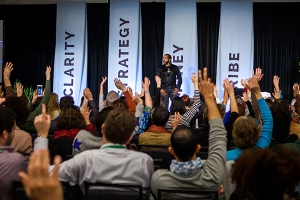
I’ve stood in front of executives who’ve lost their way, sales teams running on fumes, founders consumed by the machine of their own making. And I’ve watched them remember—mid-poem, mid-line, mid-tear—that they’re not here to perform. They’re here to connect. To serve. To mean something.
That’s what soulful leadership does. It reconnects you to your why so your how can have integrity.
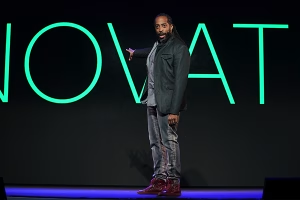
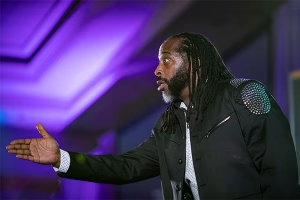
When I take the stage, I don’t speak at people—I speak into them. Because deep, purposeful leadership doesn’t come from above. It rises from within. It’s not louder—it’s truer. And in a world obsessed with being busy, soulful leadership asks, “Are you being honest?”
We’ve all been in rooms where someone dazzles but doesn’t move us. Where we’re impressed but not impacted. That’s not leadership—that’s theater. Real leadership feels. It’s got weight. Depth. Resonance. And when I talk to leaders, I’m not interested in what they do—I want to know what drives them. What breaks them. What they’d fight for. What they’d bleed for.
Because if you lead from that place? Your team will follow you through fire. Not because you’re perfect, but because you’re real.
This isn’t just motivational fluff—it’s a fundamental shift. From chasing applause to chasing alignment. From high-performance to high-purpose. From title to truth.
And yes, you can have both. Yes, you can hit the goals and the gut. But it starts by choosing to lead with soul. By choosing storytelling over status. Humanity over hierarchy. It starts by looking in the mirror and asking, “What part of me is still trying to perform—and what part is ready to lead?”
So let’s stop pretending we have it all together. Let’s start leading like we actually care. Like we’re not afraid to be moved—and to move others in return.
Because performance might get you claps.
But purpose gets you change.